Fishing Planet
- 4.8
- Rating
- 5.00M
- Installs
- Free
- Price

 Analysis by App-foxy
I approached Fishing Planet as more than a relaxing fishing game. It is a sports simulation built around the small decisions that make fishing feel deliberate: choosing where to cast, watching the water, managing a catch, and accepting that patience is part of the activity. Developed by Fishing Planet LLC, it is free to start on Android, carries an Everyone age rating, and has already reached over 5 million installs. After spending time with it, I think its biggest strength is how seriously it treats the rhythm of fishing without requiring you to leave home.
That realism also shapes who will enjoy it. If you want quick arcade action, constant rewards, or a simple game that can be played comfortably with one hand, this may feel slower and more demanding than expected. If you like learning a system, making careful adjustments, and playing online around other anglers, it offers much more depth than a typical casual sports title. My review focuses especially on how clearly the game works for different abilities, devices, and everyday situations, because a realistic simulator is only enjoyable when its controls and information remain manageable.
How the interface supports reading, navigation, and learning
The first thing I noticed is that Fishing Planet asks me to pay attention rather than rush through menus. Its appeal depends on understanding what is happening around the cast, so readable information and predictable navigation matter as much as the fishing itself. The game presents a lot of context for each decision, and that can be satisfying once the basic flow becomes familiar. At the same time, newcomers should expect a learning period instead of an immediately obvious arcade-style interface.
You May Also Like

 Google Keep - Notes and lists
Google Keep’s Quiet Growth Shows the Appeal of Simpler Notes
As mobile work gets busier, Google Keep keeps winning a simple contest: capture a thought quickly, find it later, and get on with the day.

 Blood Strike: 2.5 Anniversary
Blood Strike’s Loadouts Turn Every Drop Into a Tactical Gamble
A close look at Blood Strike’s custom loadouts: how fast access to signature weapons reshapes its battle royale rhythm, rewards preparation, and narrows the gap between fights.

 Pandora - Music & Podcasts
Pandora’s Music Is Easy to Start, but Harder to Recover
Pandora’s strength is its low-effort path from a seed to a station. Its weak spot is how much confidence it asks you to place in connection, setup, and quiet recovery.

 8 Ball Pool
 Is Built on Rivalries, Rematches, and Routine
A close look at the rivalries, rematches, shared routines, and unanswered safety questions that turn a quick pool match into a persistent mobile community.

 Samsung Music
’s Quiet Strength Is Playing What You Already Own
Its reach comes less from spectacle than from dependable access to a personal library. That simplicity is both the app’s strongest retention engine and its ceiling.

 AccuWeather: Weather Radar
AccuWeather Review: A Quick, Clear Forecast for Everyday Decisions
For everyday plans, the best forecast is the one you can understand quickly. AccuWeather makes rain timing, radar, and local conditions easy to act on, with a few trade-offs.
More From Our News Desk



I found it easier to approach the game in short stages. Rather than trying to understand every option before fishing, I would begin with the basic cast-and-retrieve rhythm, then gradually pay attention to the details that affect the next attempt. This is a useful habit for anyone who finds dense game interfaces tiring. It reduces the amount of information I need to process at once and turns the opening sessions into a practical tutorial created by my own pace.
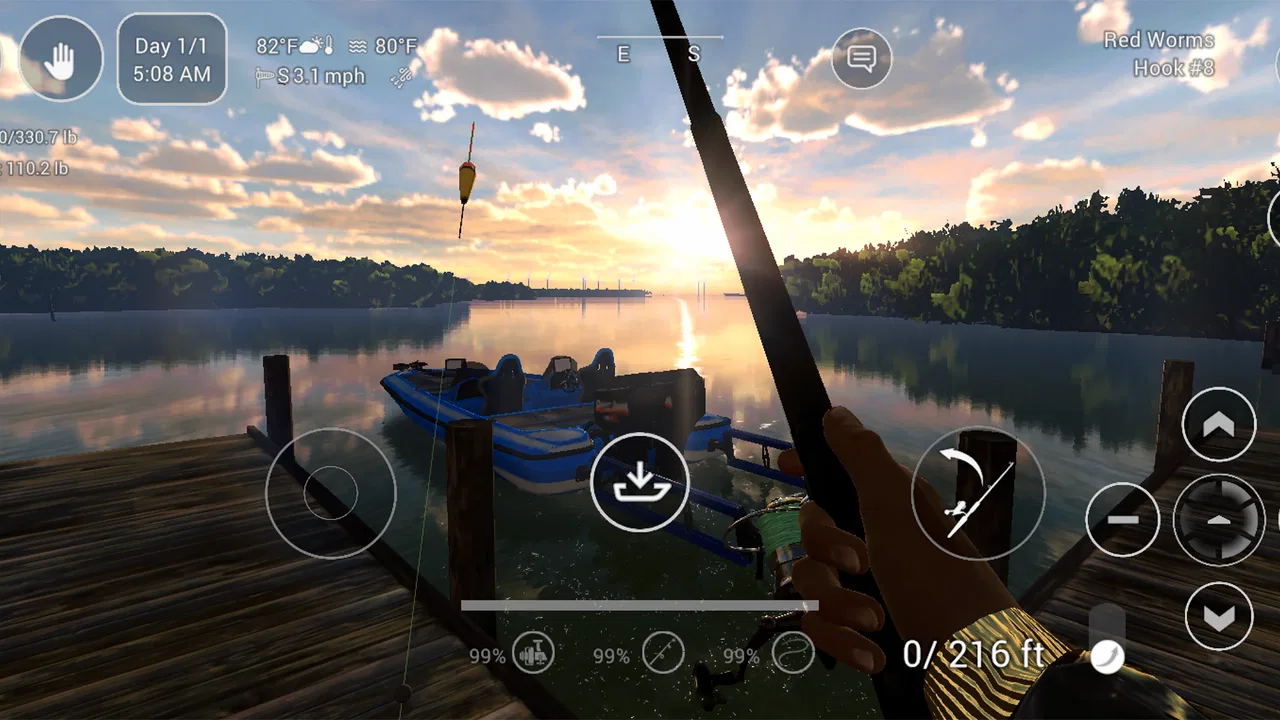
The visual presentation supports the simulation atmosphere, but realism can create its own readability challenge. Water, weather, equipment, and environmental detail may look attractive, yet important movement can be subtle. A player who has difficulty distinguishing small changes on screen may need to spend more time learning which visual cues matter. I would not recommend judging the game after only a few minutes, because the interface becomes clearer when I understand what I am watching for.
Text size and contrast are especially important on a phone. On a larger display, menus and equipment information are easier for me to inspect without feeling crowded. On a smaller screen, I have to concentrate more, particularly when switching between gameplay and preparation. This is one reason I see the game as better suited to a calm seated session than to hurried play while walking or commuting.
The online multiplayer focus adds another layer to navigation. Fishing is not presented only as a private, isolated activity; the wider experience is designed around sharing the virtual sport with other players. That can make a session feel more alive, but it also means that someone seeking a completely quiet, self-contained game may find the social side less appealing. I prefer treating multiplayer as an optional change of atmosphere rather than the sole reason to play.
For a new player, my practical advice is to keep the first sessions simple. Learn the basic interaction, observe how the game communicates a bite or a successful action, and avoid changing several things at once. When a catch does not go as planned, changing one choice at a time makes the result easier to understand. That approach is particularly helpful for players who process instructions slowly or who become frustrated when several on-screen signals compete for attention.
Why the slower pace can help some players
Fishing Planet does not depend entirely on fast reflexes in the way a racing game or competitive shooter does. Much of the enjoyment comes from observation, timing, and preparation. For me, that creates a more forgiving mental rhythm: I can think about what I am doing instead of reacting continuously to threats. Players who prefer measured sports games may find this more comfortable than a title built around rapid movement.
However, slower does not automatically mean easy. The game still expects attention, and a player may need to respond at the right moment or interpret what the equipment and environment are communicating. Someone with limited dexterity may appreciate the absence of constant high-speed action but still struggle if several control steps must be coordinated. The difference is that the challenge feels more like managing a process than surviving a frantic encounter.
I also think the game can work well for players who enjoy repeatable routines. A familiar setup, a focused fishing location, and a small personal goal can make a session feel organized rather than overwhelming. For example, I might play with the aim of learning one technique or becoming more comfortable with one part of the interface. That is more accessible than treating every session as a test of total mastery.
Controls, sensory load, and practical play habits
The main motor question is not whether the game is physically intense, but whether its interactions feel comfortable on a particular device. Touch controls can be convenient because the phone is always available, yet they also demand accuracy on a relatively small surface. Players with limited hand movement, tremors, or difficulty maintaining a precise touch may find some moments more demanding than the calm subject matter suggests.
I would use both hands when possible and keep the device supported rather than holding it in the air. That simple change makes longer sessions less tiring and gives me more stability when interacting with small controls. A stand or a comfortable grip can also help players who experience hand fatigue. These are not special game features, but they make a meaningful difference to how approachable the experience feels in everyday use.
Players sensitive to visual motion or busy scenes should pay attention to how the moving water and environmental effects feel over time. The game’s realistic presentation is part of its identity, but natural-looking motion can still become tiring for some people. I would begin with a short session, lower the overall visual intensity of the environment if the device allows it, and stop before discomfort builds. It is better to preserve a comfortable routine than to force a long play session.
Sound can also influence the experience. Fishing games often use audio to reinforce atmosphere and timing, but not every player wants continuous environmental sound. If I am playing in a shared room, on public transport, or in a quiet workplace, I would keep the volume low or use the game silently if the available controls permit it. The visual side remains central enough that the game can still feel purposeful without becoming the loudest thing in the room.
One useful trade-off is that realism encourages patience, while mobile play often encourages short bursts. I found the best compromise by separating preparation from active fishing. A few minutes can be enough to review what I want to try, while a longer uninterrupted period is better when I want to settle into the atmosphere. This makes the game more practical for people whose energy, concentration, or free time changes from day to day.
The game is free to start, which lowers the barrier to testing the controls and deciding whether the pace suits you. In-app purchases range from $1.49 to $49.99 per item, so I would approach spending carefully and decide in advance whether I am comfortable paying for optional progress or content. A free entry point is useful for accessibility because it lets me evaluate the experience without an initial purchase, but the presence of purchases means families should still discuss spending expectations.
A realistic everyday session
Imagine finishing work or school with half an hour available and wanting something quieter than a competitive match. I would sit somewhere stable, use headphones only if they are comfortable, and begin by deciding on one modest goal rather than trying to optimize everything. That might mean practicing a cast, watching how a fish responds, or simply learning the rhythm of a location. If concentration starts to fade, the game is easy to leave without feeling that I have failed a long campaign.
That same scenario changes for someone playing during a noisy commute. Small text, glare, movement around the player, and an unstable grip all make the experience less comfortable. In that context, a simpler arcade fishing game may be the better choice because it communicates success more loudly and demands less sustained observation. Fishing Planet is strongest when I can give it a little attention, not when I am trying to squeeze it into every spare minute.
Situational access: who benefits from the design and who may struggle
The game’s broadest accessibility strength is its flexible tempo. I can approach it as a relaxing simulation, a learning exercise, or an online sports activity, depending on what I want from the session. That flexibility helps people with different energy levels and schedules. Someone who cannot commit to a long gaming block can still use short sessions to become familiar with the systems, while a dedicated player can spend much longer refining technique.
It is also a good match for players who prefer visual learning through repetition. Instead of memorizing a large rulebook, I can observe an outcome, adjust one decision, and try again. This trial-and-adjustment loop gives the game a practical teaching quality. It may be less suitable for someone who wants every mechanic explained immediately in plain, highly simplified steps, but patient learners can discover a lot by experimenting.
Online multiplayer can support social play for people who prefer participating from home rather than traveling to a fishing spot. It gives the activity a shared setting without requiring the physical equipment, outdoor access, or mobility needed for real fishing. That is a meaningful advantage, especially for players who enjoy the culture of fishing but cannot easily reach a lake, river, or coast.
There is a trade-off, though. Virtual fishing cannot replace the sensory experience of being outdoors, and the simulator’s realism may remind me of what is missing: real weather, physical casting, and the unpredictability of a natural environment. Players looking for a strong outdoor or exercise component should choose a different activity. This is a game about representing fishing, not delivering its physical benefits.
The age rating is Everyone, which makes the game broadly approachable in family settings. Even so, I would not assume that every child will enjoy it. Younger players who expect immediate action may lose interest during the slower learning phase, while children who like collecting, experimenting, and observing may become deeply engaged. The free starting price is convenient for trying it together, but the in-app purchase range makes it sensible for an adult to supervise spending.
Device age matters as well. The game supports Android versions from 6.0 onward, which gives it a wide potential audience, but support for an operating system does not guarantee an equally smooth experience on every phone. Realistic scenes and online play can be more demanding on older hardware. If a device becomes warm, loses battery quickly, or struggles to maintain a comfortable frame rate, shorter sessions and lower visual settings are worth considering before deciding that the game itself is unsuitable.
Comparing it with simpler fishing games
Compared with casual fishing games, Fishing Planet asks for more involvement. A casual alternative is usually better when I want instant rewards, bright feedback, and a session that can be understood in seconds. This game is better when I want the choices before and during a cast to matter. The difference is not simply difficulty; it is a difference in purpose. One treats fishing as a quick activity, while the other treats it as a sport to study.
Compared with a traditional console or computer simulator, the mobile format is more convenient but can feel less comfortable for detailed control. A larger screen and physical input can make menus easier to inspect and reduce the strain of holding a phone. On the other hand, the mobile version is easier to pick up for a short session and does not require a dedicated gaming setup. I would choose the Android version for convenience and portability, not because a phone is automatically the best screen for simulation.
Compared with real fishing, the game wins on access and preparation. I do not need travel, equipment storage, suitable weather, or a physical location. It loses on immersion outside the screen and on the satisfaction of handling a real catch. Knowing this distinction helps set the right expectation: it is a thoughtful digital recreation, not a replacement for the outdoor hobby.
Remaining barriers and the questions I would consider before installing
The largest barrier is the learning curve. The game’s identity depends on detail, and detail takes attention. Players who become frustrated when a game does not explain its logic immediately may need patience or outside guidance. I recommend approaching the first sessions as practice rather than judging success by how many fish are caught. That mindset makes the early friction much easier to handle.
Another barrier is the combination of small-screen interaction and subtle visual feedback. People with low vision, limited precision, or sensitivity to motion should test the game cautiously and use the most comfortable display setup available. I would not promise that every control will suit every player, because the mobile format itself places limits on spacing and physical feedback. A larger compatible device may help, but the underlying touch interaction remains part of the experience.
Players may also wonder whether the game is suitable for completely offline use. Because its identity includes online multiplayer, I would plan to play with a dependable connection and avoid assuming that it behaves like a self-contained offline pastime. If reliable connectivity is a concern, a simpler offline fishing game may be more practical. That is not a criticism of the multiplayer design; it is a reminder to match the game to the situation.
Another sensible question is whether the free model feels comfortable. I can begin without paying, which is valuable for testing the pace, controls, and visual demands. Still, the purchase range means I would treat optional spending as a separate decision rather than part of the basic installation. Families and players on a strict budget should establish limits before exploring paid items, especially when a long-term simulation can encourage repeated engagement.
Finally, I would ask whether the current device is the right place to play. The current version is 1.0.483, and the game’s broad Android compatibility does not remove the practical differences between a modern large display and an older compact phone. If text feels cramped or the device struggles during online sessions, that is a real usability issue. Testing a short session before committing time or money is the most sensible approach.
My inclusive verdict after living with the simulator
Fishing Planet LLC has created a sports game that respects the patience of fishing instead of reducing it to a few rapid taps. I like that it can provide a calm alternative to more aggressive mobile genres, and I appreciate the way repetition can turn unfamiliar actions into a personal routine. Its average rating of 4.8 from around 76 thousand ratings and roughly 1.5 thousand written reviews suggests that many players connect with this approach, while its popularity shows that the audience is far broader than a niche experiment.
For me, the best audience is someone who enjoys observation, gradual improvement, and online freshwater or saltwater fishing in a realistic setting. It is also a strong option for people who want to experience the theme from home and who prefer a game that does not demand constant high-speed reactions. The free starting point makes it easy to test, and the Everyone rating makes it suitable for a wide range of households with sensible purchase supervision.
I would steer away from it if you need instant action, very large controls, a completely offline experience, or a game that explains everything without experimentation. Players with motor or sensory needs should try a short, supported session and pay attention to screen size, grip, motion, and visual clarity. A casual fishing game may be kinder for quick play, while a larger-screen simulator may be more comfortable for extended sessions.
My final recommendation is positive but specific: install it if you want fishing to feel like a process rather than a button press. Give yourself time to learn, use a stable setup, and treat purchases as optional decisions rather than necessities. Its most inclusive quality is the ability to let you set the pace, but its realism still asks for patience, attention, and a comfortable device. That balance makes it a worthwhile choice for the right player, not a universal fit for every mobile gamer.
FAQs for Fishing Planet
01What platforms is Fishing Planet available on?
Fishing Planet is available on multiple platforms, including Windows PC, PlayStation 4, Xbox One, and macOS. It is also accessible on Android and iOS devices. This cross-platform availability ensures that players can enjoy the game on their preferred devices, whether at home or on the go.
02Is Fishing Planet free to play?
Yes, Fishing Planet is free to play. However, it offers in-app purchases that enhance the gaming experience. These purchases can include premium accounts, additional gear, and other items that provide a competitive edge or enrich the virtual fishing experience.
03What are the key features of Fishing Planet?
Fishing Planet offers a realistic fishing simulation with over 170 species of fish, 23 scenic waterways, and a variety of weather conditions. The game provides advanced AI for fish behavior, ensuring an authentic experience. Customizable tackle setups and multiplayer competitions further enhance the gameplay.
04Are there any system requirements for Fishing Planet?
Yes, Fishing Planet has specific system requirements. For PC, it requires Windows 7/8/10 and at least 4 GB of RAM. A decent graphics card and stable internet connection are also recommended. Mobile versions require iOS 11.0 or Android 5.0 and up, ensuring smooth gameplay.
05Can I play Fishing Planet offline?
No, Fishing Planet requires an internet connection to play. The game is designed to be a multiplayer online experience, allowing players to compete and interact with others globally. This connectivity also ensures regular updates and access to new features.
Pros
- Realistic fishing simulation with detailed graphics.
- Wide variety of fish species and locations.
- Multiplayer mode enhances social experience.
- Frequent updates with new content and features.
- No pay-to-win elements
- skill-based gameplay.
Cons
- Requires constant internet connection.
- Learning curve may be steep for beginners.
- Occasional in-game bugs or glitches.
- Limited offline play options available.
- In-app purchases can be pricey for extras.

Fishing Planet
Gallery